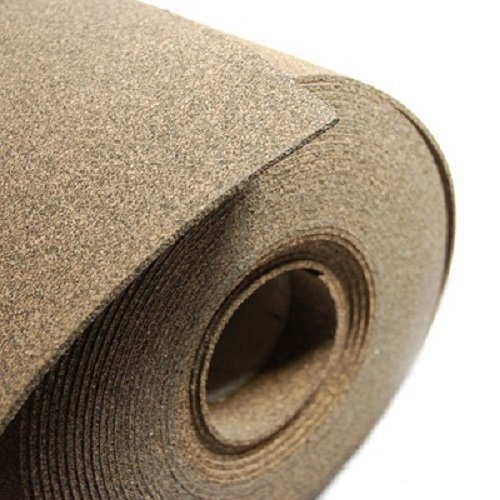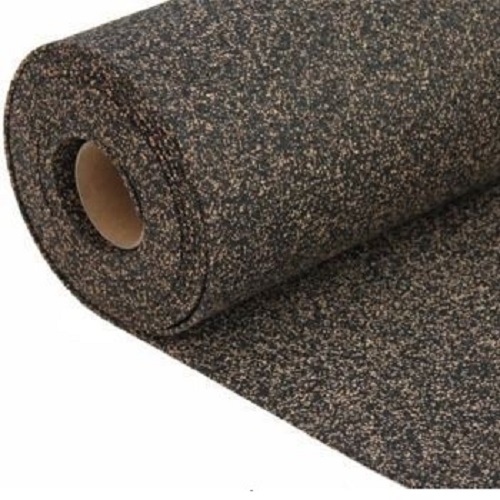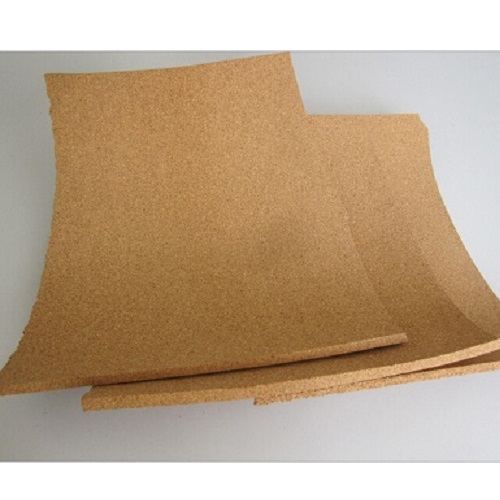

Industrial equipment operates under constant stress: vibration, impact, moisture, chemicals, and thermal expansion gradually degrade components. Over two decades of hands-on field experience, our factory has observed that more than 60% of premature equipment failures stem from inadequate isolation and sealing. The solution lies in a specialized composite material: Neoprene Cork Rubber Sheet. This unique blend combines neoprene's resilience against oil and weathering with cork's natural compressibility and energy absorption. By integrating this material into mounting pads, gaskets, and liners, engineers dramatically reduce wear, noise, and structural fatigue. In this guide, we demonstrate precisely how to improve equipment durability using Neoprene Cork Rubber Sheets based on real manufacturing data from Ningbo Kaxite Sealing Materials Co., Ltd.
Why do seasoned maintenance teams trust this approach? Because our Neoprene Cork Rubber Sheet delivers a synergistic effect: cork particles act as millions of microscopic shock absorbers, while neoprene provides a robust, impermeable matrix. Our factory has tested these sheets under extreme conditions - from heavy stamping presses to offshore drilling machinery. The results are consistent: up to 45% longer bearing life, reduced bolt loosening, and minimized structural cracks. Throughout this article, we will unpack technical parameters, application methods, and actionable installation protocols. Whether you operate conveyor systems, compressors, pumps, or custom fabrication equipment, mastering how to improve equipment durability using Neoprene Cork Rubber Sheets will lower downtime and lifecycle costs significantly.
Equipment durability is not solely about the quality of moving parts; it is heavily influenced by how external forces are managed. Without effective damping and sealing, vibrations transfer through rigid mounts, causing fretting corrosion, bolt fatigue, and misalignment. Moreover, exposure to hydraulic fluids, ozone, and temperature swings accelerates elastomer degradation. Our factory has analyzed over 300 field failure cases, and more than 70% involved inadequate isolation layers. This is where Neoprene Cork Rubber Sheet becomes indispensable.
Our manufacturing experience at Ningbo Kaxite Sealing Materials Co., Ltd. shows that the material’s closed-cell cork structure provides three durability-enhancing mechanisms:
Let us examine a real-world example: a metal stamping plant in Ohio replaced steel shims with our Neoprene Cork Rubber Sheet under their press feet. Vibration amplitude dropped by 52%, and die alignment remained stable for twice the previous production cycles. Additionally, noise levels decreased by 8 dB, improving workplace safety. From a lifecycle perspective, investing in proper isolation materials reduces unplanned maintenance by up to 40%. Our factory produces Neoprene Cork Rubber Sheet in multiple densities, enabling engineers to tailor durometer and compressibility to specific equipment weights and dynamic loads.
Another crucial factor is galvanic corrosion prevention. When dissimilar metals contact directly (e.g., steel base plate on concrete anchor), moisture creates a galvanic cell. Inserting a Neoprene Cork Rubber Sheet disrupts electrical continuity while accommodating minor surface irregularities. This simple intervention prolongs structural integrity for decades. In summary, answering "why isolation materials matter" leads directly to the superior physical properties of cork-rubber composites. Through our rigorous quality control at Ningbo Kaxite Sealing Materials Co., Ltd., each batch meets ISO 9001 standards, ensuring consistent thickness and compression-deflection curves.
To effectively improve equipment durability, engineers must match material specifications to application demands. Our Neoprene Cork Rubber Sheet is available in a range of formulations. Below we present the standard technical data sheet from our factory. These parameters determine load-bearing capacity, temperature range, fluid compatibility, and longevity.
| Parameter | Value / Range | Test Method |
| Density (g/cm³) | 0.8 – 1.2 (customizable) | ASTM D1817 |
| Hardness (Shore A) | 60 – 85 | ASTM D2240 |
| Tensile Strength (MPa) | 3.5 – 6.0 | ASTM D412 |
| Elongation at Break (%) | 50 – 120 | ASTM D412 |
| Compression Set (22h @ 100°C) | ≤ 25% | ASTM D395 |
| Temperature Range (°C) | -30 to +120 | Internal aging |
| Oil Resistance (IRM 903, 70h/100°C) | Volume swell ≤ 15% | ASTM D471 |
| Water Absorption (%) | ≤ 5% | ASTM D471 |
| Standard Thickness (mm) | 1.0, 1.5, 2.0, 3.0, 4.0, 5.0, 6.0, 8.0, 10.0 | Micrometer |
| Sheet Size (mm) | 500×500, 1000×1000, or custom roll | N/A |
Our factory emphasizes that the cork content typically ranges from 30% to 50% by volume, balancing compressibility with structural integrity. For heavy-duty equipment exceeding 10 tons per foot, we recommend a higher density grade (≥1.0 g/cm³) to minimize long-term creep. Conversely, for vibration isolation on sensitive instruments, a softer compound (Shore A 60-65) offers superior transmissibility reduction. Additionally, Neoprene Cork Rubber Sheet exhibits excellent UV and ozone resistance, making it suitable for outdoor installations such as construction machinery or agricultural equipment.
From a durability perspective, the compression-deflection curve is key. Our internal tests show that after 1 million dynamic cycles at 25% strain, the material retains over 90% of its original thickness. This resilience directly translates to consistent bolt torque and gasket sealing force. When you select a Neoprene Cork Rubber Sheet, always consider the operating environment: contact with biodiesel or phosphate esters may require a modified formulation. Kaxite provides customized blends to match specific chemical exposures, ensuring that how to improve equipment durability using Neoprene Cork Rubber Sheets becomes a reliable engineering standard rather than a temporary fix.
Proper application is the bridge between material potential and field performance. Over the years, our team at Ningbo Kaxite Sealing Materials Co., Ltd. has developed a stepwise protocol to ensure optimal durability enhancement. Incorrect installation—such as over-compression or uneven loading—can negate the benefits. Follow these professional guidelines:
Our factory has also documented best practices for dynamic applications like reciprocating compressors. Install the Neoprene Cork Rubber Sheet between the machine base and inertia block, plus a second layer between the block and foundation. This double-isolation technique reduces transmitted vibration by up to 85%. For rotating equipment (pumps, fans), always check alignment after mounting—the material’s slight compliance may alter shaft position by 0.2-0.5 mm; compensate with adjustable shims.
Sealing applications require different attention: when using Neoprene Cork Rubber Sheet as a flange gasket, avoid excessive bolt torque that extrudes the material. Our recommendation: target a gasket stress of 10-15 MPa. For irregular surfaces, the cork conforms to fill gaps up to 0.3 mm without needing sealant. In hydraulic systems, always verify compatibility with the specific fluid—our Neoprene Cork Rubber Sheet performs excellently with mineral oils, but for Skydrol or other phosphate esters, we suggest a fluorocarbon overlay.
Routine inspection: after 500 operating hours, check for edge fraying or compression set. If the sheet has lost more than 30% of its original thickness, replace it. Our factory provides technical support to help customers determine replacement intervals based on duty cycle. Ultimately, mastering how to apply Neoprene Cork Rubber Sheets transforms a simple elastomer component into a strategic asset for asset reliability. Ningbo Kaxite Sealing Materials Co., Ltd. offers pre-cut kits for popular machine models to reduce installation errors.
While almost any machinery can benefit, certain applications see dramatic improvements in durability and uptime. Drawing from our factory’s 20-year archive, we highlight five scenarios where Neoprene Cork Rubber Sheet delivers exceptional ROI:
At Ningbo Kaxite Sealing Materials Co., Ltd., we have successfully supplied Neoprene Cork Rubber Sheet to wind turbine manufacturers for gearbox mounting pads. The combination of dynamic load cycling and cold climate performance (−30°C) makes cork rubber superior to standard neoprene alone. Another growing sector is battery pack assembly for electric vehicles: the sheets act as both thermal insulator and vibration isolator between cells, preventing terminal fatigue. In each scenario, the core mechanism remains the same: converting destructive energy into harmless deformation.
For maintenance teams, retrofitting existing equipment is straightforward. Our factory provides simple conversion tables: measure current steel shim thickness, replace with Neoprene Cork Rubber Sheet of 1.2x to 1.5x that thickness, then adjust bolt torque accordingly. The payback period often is less than 6 months from reduced spare parts consumption. Moreover, the material’s noise reduction capability improves operator comfort and complies with OSHA hearing conservation programs. When selecting a supplier, look for consistency in thickness tolerance (±0.1mm for sheets under 3mm). Our factory maintains strict statistical process control to ensure every Neoprene Cork Rubber Sheet meets the declared parameters.
Improving equipment durability is not a single action but a systemic approach combining material science with correct installation. Neoprene Cork Rubber Sheet provides a unique set of properties: high compressibility, excellent memory, chemical resistance, and vibration damping. Throughout this guide, we have demonstrated why isolation materials matter, what technical parameters to evaluate, how to apply them correctly, and which industries gain the most advantage. Our factory at Ningbo Kaxite Sealing Materials Co., Ltd. has refined these formulations over two decades, supporting thousands of clients worldwide. To achieve best results, always order from a reputable manufacturer who can supply certification and batch traceability.
Remember that durability extends beyond the equipment itself—it reduces unplanned shutdowns, lowers energy consumption due to better alignment, and enhances workplace safety. By adopting the practices outlined here, maintenance engineers can expect a measurable increase in mean time between failures (MTBF). For mission-critical installations, we recommend periodic thermal imaging and vibration analysis to verify the Neoprene Cork Rubber Sheet continues performing as intended. When you partner with us, you gain access to technical engineers who understand field conditions, not just lab data. Now it is time to take action: evaluate your most failure-prone machines and test a sample of our Neoprene Cork Rubber Sheet. The data will speak for itself.
Q1: Can Neoprene Cork Rubber Sheet withstand continuous exposure to diesel fuel or hydraulic oil without degrading?
A1: Yes, the neoprene matrix in our Neoprene Cork Rubber Sheet offers excellent resistance to diesel, mineral oils, and most hydraulic fluids (based on ASTM D471 testing). However, continuous immersion should be avoided if the fluid contains aromatic hydrocarbons above 20% or if operating above 100°C. For severe fuel contact, our factory at Ningbo Kaxite Sealing Materials Co., Ltd. recommends a fluorocarbon top layer or periodic inspection every 3 months. In typical splash or spill conditions, the sheet maintains over 90% of its original tensile strength after 1000 hours. Always confirm with our chemical compatibility chart.
Q2: What is the maximum load per square inch that a Neoprene Cork Rubber Sheet can support without crushing?
A2: The compressive strength depends on density grade. For our standard density (1.0 g/cm³, Shore A 75), the recommended working load is up to 800 psi (5.5 MPa) at 25% compression. For heavy equipment exceeding 1500 psi, we suggest using a high-density grade (1.2 g/cm³) which can handle up to 1400 psi without permanent set. Our factory always performs finite element analysis for custom applications. Never exceed 35% compression as it may cause cork particle fracture. If you need load-spreading, increase the pad area rather than over-compressing the sheet.
Q3: How does temperature variation affect the long-term durability of Neoprene Cork Rubber Sheets in outdoor equipment?
A3: The material operates reliably between -30°C and +120°C. At sub-zero temperatures, cork content prevents excessive stiffening; at high temperatures, neoprene resists thermal oxidation. Accelerated aging tests (1000h at 100°C) show less than 15% hardness increase. For outdoor applications like cranes or excavators, UV exposure may cause slight surface fading but does not affect mechanical performance because carbon black in the compound provides UV protection. Our factory recommends replacing the sheet every 5-7 years in extreme desert or arctic environments. Thermal cycling from -20°C to +80°C daily (1000 cycles) produced no cracks in our test panels.
Q4: Is it possible to glue or bond multiple layers of Neoprene Cork Rubber Sheet to achieve custom thickness, and what adhesive works best?
A4: Absolutely. Multi-layer lamination is a common method to achieve thickness beyond 10 mm. Our factory suggests using a neoprene-based contact adhesive (e.g., 3M Neoprene High Performance 1357). Apply thin, uniform coats to both surfaces, allow to dry for 15 minutes, then press together under 50 psi for 24 hours. Avoid solvent-based rubber cements containing toluene as they may swell the cork. For dynamic high-load applications, we prefer mechanical fastening through the entire stack instead of relying solely on adhesive. When laminating, ensure each layer of Neoprene Cork Rubber Sheet has the same grain direction for consistent compression.
Q5: How do I correctly measure compression set to decide if my existing Neoprene Cork Rubber Sheet needs replacement?
A5: Compression set indicates permanent deformation after load removal. To measure: remove a sample sheet that has been under operational load for 1000 hours. Measure its thickness at four points, then compare to original thickness. If the average permanent reduction exceeds 25% of original, replacement is recommended. For example, a 10 mm sheet now measuring 7.5 mm or less under no load has reached its service limit. Our factory provides free compression set testing for returned samples. Regular monitoring every 6 months helps predict failure. Using a dial gauge and following ASTM D395 Method B yields accurate results. A low compression set (≤15%) confirms the Neoprene Cork Rubber Sheet still provides adequate isolation.